
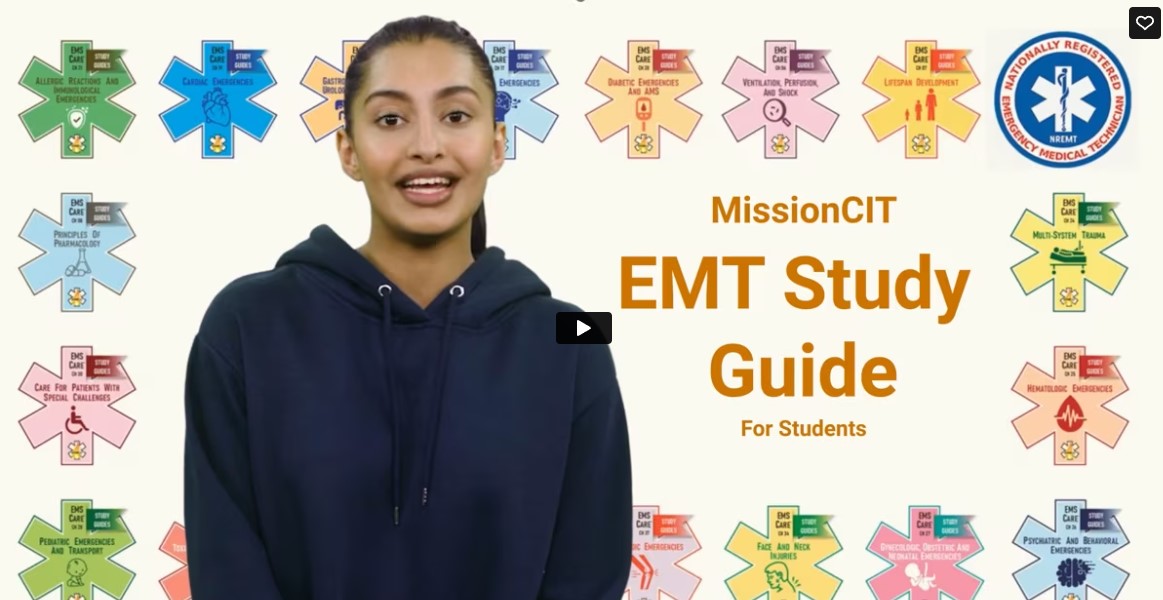
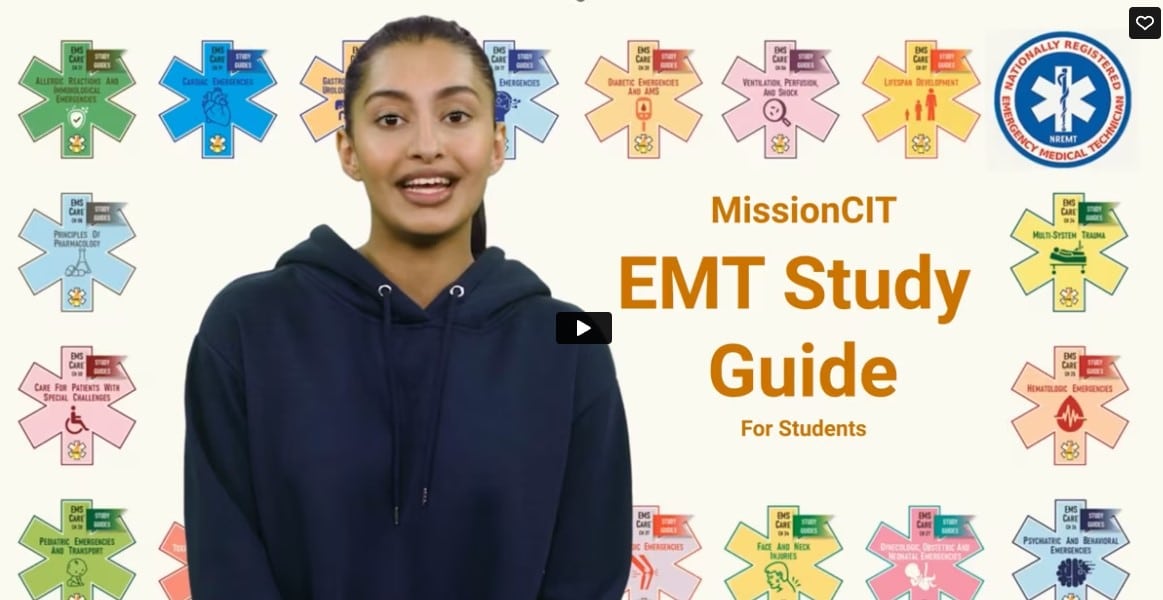
MissionCIT EMT Prep with NREMT Practice Tests is a proven methodology for passing the NREMT Written Exam on your next try.

EMT Prep & NREMT Practice Tests

MissionCIT EMT Prep with NREMT Practice Tests is a proven methodology for passing the NREMT Written Exam on your next try.  Did you know that virtually all MissionCIT Initial EMT Class Students pass the NREMT written exam on the first try? Now, you can get access to the same interactive Study Guides, enabling you to confidently pass the NREMT exam when you follow our process.
NREMT Distributive Education for EMS Educators | EMT Prep & NREMT Practice Tests

Why Choose MissionCIT EMT Prep & NREMT Practice Tests?

What today's Student Wants

Online, flexible, interactive, available on PC and Mobile. Full online EMT Course, flashcards, NREMT exams & more.

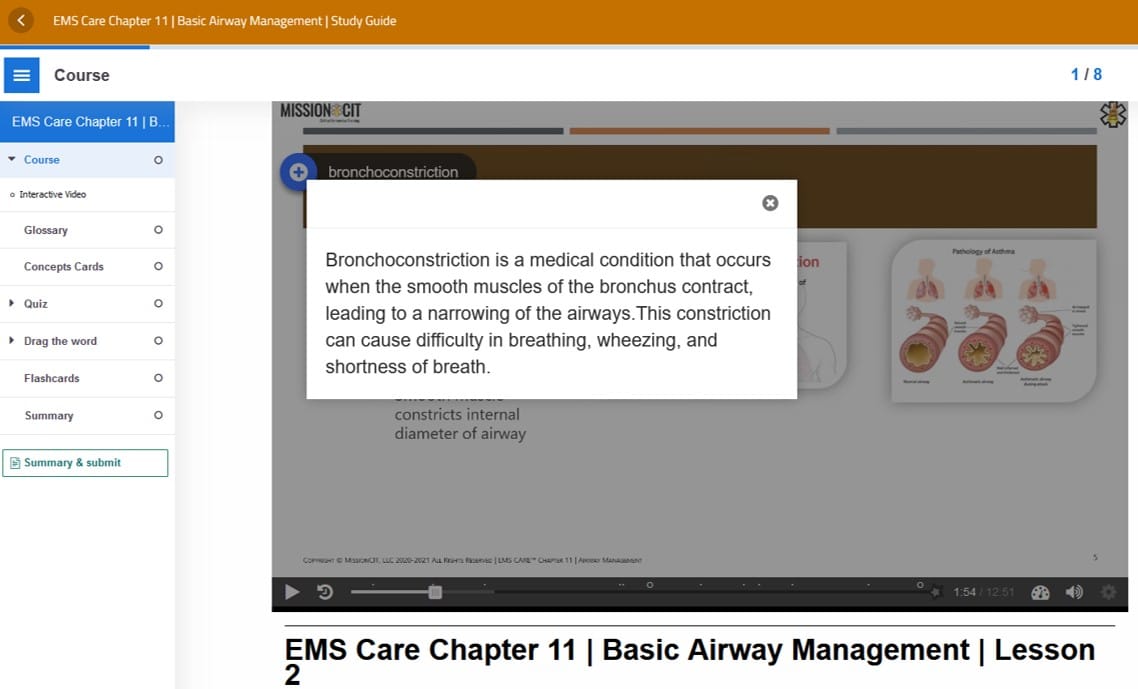
Interactive Study Guides

Your get the best tools to pass the NREMT Written & Psychomotor Exam on your next try | Complete NHTSA Content.

Personal
EMT Tutor

Imagine a chatbot available 24x7 that you can ask any NREMT related question? It's here - check it out!

Think like an EMT

You learn, not memorize, gaining the confidence that you know the material, fully prepared to do your best

Why do the MissionCIT EMT Prep & NREMT Practice Tests Work?

Why does this work? First, understand the MissionCIT EMS Educator Philosophy. Most Initial EMT classes are taught in-person or virtually by instructors from PowerPoints. MissionCIT realizes that most EMS instructors are great at providing skills and experiential learning. However, few are as good at consistently conveying the factual content the NREMT written exam requires. Therefore, students must read the book, process the information, and practice similar NREMT tests to prepare for the exam. A tall order that often falls short.

Hence, MissionCIT has developed a new NREMT EMT Prep & NREMT Practice Tests system that enables students to benefit from the online content that provides the learning needed to prepare for becoming an EMT and passing the written exam.
NREMT Distributive Education for EMS Educators | EMT Prep & NREMT Practice Tests

Thousands of NREMT Style Questions

This is a Timed Quiz. You have 60 mins to complete the Quiz.

Sorry, Time is up !


Mock Test #1 - Timed NREMT practice test

NREMT Practice Test #1

Get ready for a practice NREMT exam! This is a timed mock test with 100 questions in 60 minutes. It covers all five NREMT assessment areas:Medical/Obstetrics/Gynecology, Trauma, Airway & Ventilation (ARV), Operations, and Cardiology. Each question will be labeled with its category. You'll see your overall score and scores for each area at the end, helping you identify your strengths and weaknesses. Good luck!

1 / 100

Category: EMS Operations

1. What should the team leader do if a problem with a team member is not directly or immediately impacting patient care?

2 / 100

Category: EMS Operations

2. Which organization establishes the foundational guidelines for EMT training programs in most U.S. states?

3 / 100

Category: EMS Operations

3. What is the first step in EMS decision making?

4 / 100

Category: EMS Operations

4. A _________ is an EMS provider who has extensive training in various aspects of advanced life support (ALS).

5 / 100

Category: EMS Operations

5. What error can lead to premature diagnosis during a call?

6 / 100

Category: EMS Operations

6. What would the EMT most likely be asked to do when assisting a paramedic with endotracheal intubation?

7 / 100

Category: EMS Operations

7. What should an EMT strive for to be considered a great EMT?

8 / 100

Category: EMS Operations

8. Considering the limitations in their scope of practice, how do first responders like firefighters, law enforcement, and park rangers with EMR training contribute to the overall effectiveness of the EMS system?

9 / 100

Category: EMS Operations

9. What is true regarding the EMS medical director and an EMT's scope of practice?

10 / 100

Category: EMS Operations

10. What happens in an interdependent group when one person fails?

11 / 100

Category: EMS Operations

11. The ____________ oversees EMT well-being, career progression, and compensation.

12 / 100

Category: EMS Operations

12. When would an EMT require special permission from the medical director and the state EMS office, according to the National EMS Scope of Practice Model?

13 / 100

Category: EMS Operations

13. Which entity regulates the prehospital emergency care provider's scope of practice and training standards?

14 / 100

Category: EMS Operations

14. What should the paramedic remember after assuming care of a cardiac arrest patient from an EMT?

15 / 100

Category: EMS Operations

15. You have _________ when working in an independent group.

16 / 100

Category: EMS Operations

16. What is the focus of an advanced intervention when the EMT assists a paramedic?

17 / 100

Category: EMS Operations

17. Which of the following descriptions best characterizes emergency medical services (EMS)?

18 / 100

Category: EMS Operations

18. An EMT should be ________ when transferring patient care to another healthcare provider.

19 / 100

Category: EMS Operations

19. What should be used for patient handoff between EMTs and hospital staff?

20 / 100

Category: EMS Operations

20. Which statement regarding the Americans With Disabilities Act (ADA) of 1990 is accurate?

21 / 100

Category: EMS Operations

21. Who is the person responsible for authorizing EMTs to perform emergency medical care in the field?

22 / 100

Category: EMS Operations

22. What action should an EMT candidate take if they have a felony or misdemeanor conviction?

23 / 100

Category: EMS Operations

23. Which EMS provider is responsible for advanced treatment skills, such as cardiac monitoring and pharmacologic interventions?

24 / 100

Category: EMS Operations

24. Which scenario involves the administration of ALS?

25 / 100

Category: EMS Operations

25. What should you do to your equipment to prevent the spread of disease?

26 / 100

Category: EMS Operations

26. According to your standing protocols as an EMT, under which circumstance would aspirin administration be most appropriate for a patient presenting with chest pain?

27 / 100

Category: EMS Operations

27. What should you do after applying medical restraints to a combative patient?

28 / 100

Category: EMS Operations

28. What does the statement "Why even splint the patient’s leg if they’re only going to remove it in the ED?" indicate while caring for a patient?

29 / 100

Category: EMS Operations

29. Identify the single skill or intervention that is a core training component for all prehospital emergency personnel.

30 / 100

Category: EMS Operations

30. What are the characteristics of an effective team leader?

31 / 100

Category: EMS Operations

31. What is a prerequisite for becoming licensed and employed as an EMT?

32 / 100

Category: EMS Operations

32. What type of medical direction do standing orders and protocols describe?

33 / 100

Category: EMS Operations

33. After a patient has been transferred, what is the next step in EMS decision making?

34 / 100

Category: EMS Operations

34. Which skill is a layperson likely to be trained in before EMS arrival?

35 / 100

Category: EMS Operations

35. What should an EMT be able to do according to the National EMS Scope of Practice Model?

36 / 100

Category: EMS Operations

36. What is the least likely task that the paramedic would ask the EMT to do?

37 / 100

Category: EMS Operations

37. What occurs when a BLS worker performs a skill outside his or her level of certification when assisting an ALS worker?

38 / 100

Category: EMS Operations

38. What is correct about the neonatal isolette?

39 / 100

Category: EMS Operations

39. Interference should be ________ when transferring a patient to ALS staff

40 / 100

Category: EMS Operations

40. Which statement about the NREMT is true?

41 / 100

Category: Uncategorized

41. What is capnography?

42 / 100

Category: Medical/Obstetrics/Gynecology

42. What should you do during your assessment interview with a 16-year-old female who complains of vaginal bleeding and abdominal cramping that began several hours ago?

43 / 100

Category: Medical/Obstetrics/Gynecology

43. 4. Why are infants often referred to as "belly breathers?"

44 / 100

Category: Medical/Obstetrics/Gynecology

44. How is urine transported from the kidneys to the urinary bladder?

45 / 100

Category: Medical/Obstetrics/Gynecology

45. Why must the heart work harder to move blood effectively with increasing age?

46 / 100

Category: Medical/Obstetrics/Gynecology

46. The fallopian tubes function to:

47 / 100

Category: Medical/Obstetrics/Gynecology

47. Why do middle adults commonly experience financial concerns?

48 / 100

Category: Medical/Obstetrics/Gynecology

48. 29. A 75-year-old male presents with a history of a fall with direct impact to the ribs and abdomen. Given the potential for occult injuries in this age group, which of the following is MOST important to remember during the assessment and management?

49 / 100

Category: Medical/Obstetrics/Gynecology

49. 15. What is the approximate pulse rate of a child from ages 6 to 12 years?

50 / 100

Category: Medical/Obstetrics/Gynecology

50. What physical changes typically occur in early adults?

51 / 100

Category: Medical/Obstetrics/Gynecology

51. What is correct regarding the kidneys?

52 / 100

Category: Medical/Obstetrics/Gynecology

52. What happens when a child has anxious-avoidant attachment?

53 / 100

Category: Medical/Obstetrics/Gynecology

53. 5. Compared to adults, children differ anatomically such that:

54 / 100

Category: Medical/Obstetrics/Gynecology

54. What are the waste products of aerobic metabolism?

55 / 100

Category: Medical/Obstetrics/Gynecology

55. 16. Preconventional reasoning is demonstrated when:

56 / 100

Category: Medical/Obstetrics/Gynecology

56. Pathophysiology is the branch of medicine concerned with understanding the underlying mechanisms of functional changes at the cellular and systemic level in response to:

57 / 100

Category: Medical/Obstetrics/Gynecology

57. What is correct regarding anaerobic metabolism?

58 / 100

Category: Medical/Obstetrics/Gynecology

58. The function of all other endocrine glands in the body are regulated by the _______ gland.

59 / 100

Category: Medical/Obstetrics/Gynecology

59. What is a correct statement regarding psychosocial development in the adolescent age group?

60 / 100

Category: Medical/Obstetrics/Gynecology

60. 36. We can expect age-related changes in which aspects of renal function?

61 / 100

Category: Medical/Obstetrics/Gynecology

61. What is the percentage of oxygen in the air we breathe, and then exhale?

62 / 100

Category: Medical/Obstetrics/Gynecology

62. 33. What is not a factor that contributes to a decline in the vital capacity of an elderly patient?

63 / 100

Category: Medical/Obstetrics/Gynecology

63. What should be remembered while taking care of a 4-month-old infant with respiratory distress?

64 / 100

Category: Medical/Obstetrics/Gynecology

64. When are large amounts of adenosine triphosphate (ATP) generated?

65 / 100

Category: Medical/Obstetrics/Gynecology

65. 26. Current average life expectancy falls around ________ years, with the theoretical maximum lifespan estimated to be ________ years.

66 / 100

Category: Medical/Obstetrics/Gynecology

66. What is the correct statement regarding vital signs of an infant?

67 / 100

Category: Medical/Obstetrics/Gynecology

67. 23. What is the typical pulse rate for healthy individuals between 19 and 40 years old?

68 / 100

Category: Medical/Obstetrics/Gynecology

68. What makes an infant or small toddler gain trust in a person?

69 / 100

Category: Medical/Obstetrics/Gynecology

69. What system is responsible for releasing hormones that regulate body activities?

70 / 100

Category: Medical/Obstetrics/Gynecology

70. Why is breathing often more difficult in older adults?

71 / 100

Category: Medical/Obstetrics/Gynecology

71. 37. Select the statement that accurately reflects an age-related changes within the nervous system:

72 / 100

Category: Medical/Obstetrics/Gynecology

72. 35. What are the age-related changes that contribute to the increased incidence of diabetes mellitus?

73 / 100

Category: Medical/Obstetrics/Gynecology

73. What is the most common cause of the decline in cardiac function that occurs in late adulthood?

74 / 100

Category: Medical/Obstetrics/Gynecology

74. What type of shock would a large accumulation of blood in the sac surrounding the heart cause?

75 / 100

Category: Medical/Obstetrics/Gynecology

75. Why does an infant's blood pressure typically increase with age?

76 / 100

Category: Medical/Obstetrics/Gynecology

76. Why can an infant or small child's airway be occluded if it is overextended or overflexed?

77 / 100

Category: Medical/Obstetrics/Gynecology

77. What happens to the amount of air left in the lungs after expiration in late adults?

78 / 100

Category: Medical/Obstetrics/Gynecology

78. Which of the following statements regarding toddlers and preschoolers is correct?

79 / 100

Category: Medical/Obstetrics/Gynecology

79. What is the Moro reflex?

80 / 100

Category: Medical/Obstetrics/Gynecology

80. Considering the V/Q ratio, which of the following pathological processes would primarily impact the "Q" portion?

81 / 100

Category: Medical/Obstetrics/Gynecology

81. What is the low normal systolic blood pressure for a 30-year-old?

82 / 100

Category: Medical/Obstetrics/Gynecology

82. What is a correct statement regarding middle adults?

83 / 100

Category: Medical/Obstetrics/Gynecology

83. 12. Separation anxiety typically peaks in infants and small children by the age of:

84 / 100

Category: Medical/Obstetrics/Gynecology

84. Between what ages does the anterior fontanelle fuse together?

85 / 100

Category: Medical/Obstetrics/Gynecology

85. What is the age range when the human body should be functioning at its optimal level?

86 / 100

Category: Medical/Obstetrics/Gynecology

86. 9. A 13-month-old female presents with fever and vomiting. During the physical examination, which of the following findings is most likely?

87 / 100

Category: Medical/Obstetrics/Gynecology

87. What are the noticeable characteristics of a 9-month-old infant?

88 / 100

Category: Medical/Obstetrics/Gynecology

88. What physical changes typically occur in the adolescent age group?

89 / 100

Category: Medical/Obstetrics/Gynecology

89. 31. What should you remember when assessing an 80-year-old patient in shock?

90 / 100

Category: Medical/Obstetrics/Gynecology

90. 27. All of the following are common factors that affect the vital signs of a 75-year-old patient, except:

91 / 100

Category: Medical/Obstetrics/Gynecology

91. Dysfunction of the _________ will likely cause abnormalities in metabolism/

92 / 100

Category: ARV

92. Which of the following conditions would most likely cause a sudden drop in EtCO2 readings?

93 / 100

Category: ARV

93. What does a high EtCO2 reading in a patient with altered mental status potentially indicate?

94 / 100

Category: ARV

94. In EMS, what is capnography primarily used for?

95 / 100

Category: ARV

95. A patient's EtCO2 reading is 28 mmHg. What could this indicate?

96 / 100

Category: ARV

96. Which of the following statements best describes the importance of monitoring EtCO2 in intubated patients?

97 / 100

Category: ARV

97. What is the normal range for end-tidal CO2 (EtCO2) values in a healthy adult?

98 / 100

Category: ARV

98. What does capnography provide?

99 / 100

Category: ARV

99. Which of the following best describes the shape of a normal capnography waveform?

100 / 100

Category: ARV

100. Capnography can help monitor patients with which conditions?

Your score is

0%

Sample Flashcards

ARV Flashcards Set 1

1 / 31

What are the major components of the upper airway?

2 / 31

What are the main structures of the lower airway?

3 / 31

What is the function of the epiglottis?

4 / 31

What are the cartilaginous structures that support the airway?

5 / 31

What are the primary signs of airway obstruction?

6 / 31

What is the purpose of the head-tilt, chin-lift maneuver?

7 / 31

When should the jaw-thrust maneuver be used?

8 / 31

What are two types of airway adjuncts commonly used in prehospital care?

9 / 31

Describe the function of the diaphragm in respiration.

10 / 31

Where does gas exchange occur in the lungs?

11 / 31

What is the definition of tidal volume?

12 / 31

What is hypoxia?

13 / 31

How is adequate breathing typically assessed?

14 / 31

What are signs of inadequate respiration?

15 / 31

What oxygen delivery device provides 24-44% oxygen at 1-6 L/min flow rate?

16 / 31

What is the concentration of oxygen delivered by a non-rebreather mask at 10-15 L/min?

17 / 31

What are indications for using a bag-valve mask (BVM)?

18 / 31

How often should ventilations be delivered to an adult patient using a BVM?

19 / 31

What is the gold standard for confirming correct endotracheal tube placement?

20 / 31

What are common complications of improper ventilation?

21 / 31

How can hyperventilation negatively impact cardiac output?

22 / 31

What effect can positive pressure ventilation have on the heart?

23 / 31

What device is used for advanced airway management to secure the airway in unconscious patients?

24 / 31

Airway Management

25 / 31

Pneumonia with pediatric patients

26 / 31

Bag-Valve-Mask (BVM) Ventilation

27 / 31

Respiratory Syncytial Virus (RSV)

28 / 31

Asthma in Pediatrics

29 / 31

Croup Management

30 / 31

Pediatric Respiratory Distress

31 / 31

Stridor in Pediatrics

Your score is

The average score is 97%

What do you get with the EMT Prep & NREMT Practice Tests?

What do you get with the MissionCIT Interactive Study Guides? A lot. The program includes:

  • 45 Chapters with 5 to 10 video lessons each, corresponding to the NHTSA content requirements. So that is over 300 lessons!
  • Interactive Glossaries of key vocabulary so you learn the material in context.
  • Collaborative Questions while watching the videos to test your learning as you go.
  • Content presented the way you learn. Audio, visual, and reading. All are available on PC and mobile devices.
  • Concept Cards to aid your conceptual understanding of the content.
  • Flashcards to further assist with vocabulary.
  • Lesson Summaries to concisely identify what’s most important.
  • NREMT Style questions in 50 and 100-question tests to prepare you for the actual NREMT  exam – We include over 1200 NREMT  style questions in multiple test banks. In addition, we provide evaluation test banks for each area of the NREMT  to spot your weaknesses.
  • As a bonus, we offer skills videos to help you pass the NREMT Psychomotor Exam.

Sound Interesting?

So, if you want to pass the NREMT  Written Exam on your next try, sign up now. If you have any doubts, check out our free study guide to try before you buy. Good Studying!

Note:  Study Guides will be available to sign up on February 15, 2024 – please check back then!  Fill out the form below and we will be sure to get back to you!

Contact MissionCIT (203) 649-5090